
The Community Pet Clinic turned one last month, so we spent a day inside to show you the side of the clinic you don’t get to see from the waiting room. Meet the team and the patients, and see what community medicine takes on an ordinary Wednesday.
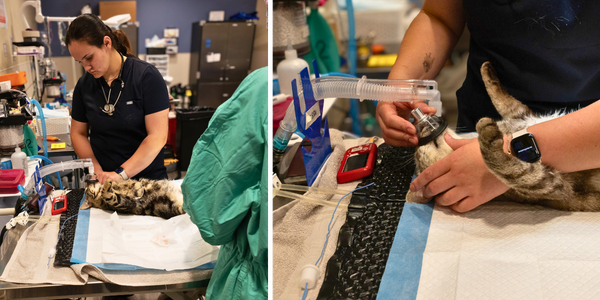
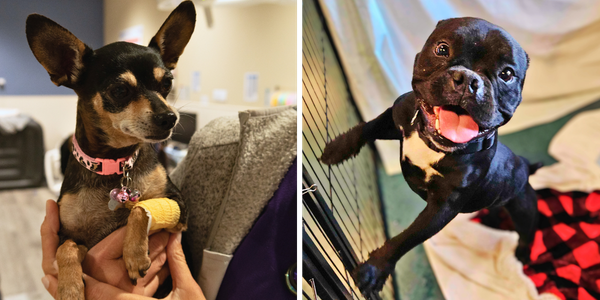
The dog on the operating table is a ten-year-old Chihuahua. She’s healthy, but she hasn’t been spayed.
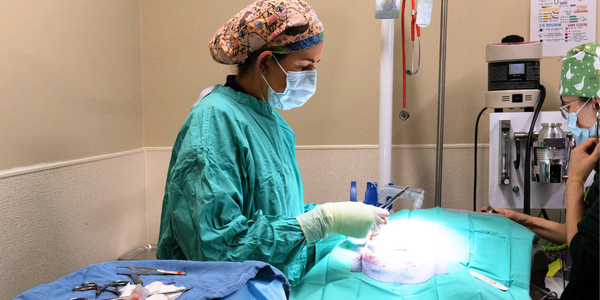
She’s here because of an accidental mating with a much larger dog. A pregnancy would be too difficult for her to see through safely. A spay at ten carries more risk than a spay at one, but a spay at any age is preferable to none.
“It would have been fantastic to spay her if she was younger,” Dr. Valerie Shearer says, “But you know what? We’re here now, and that’s fantastic for now.”
Nadia Chabaria is across the table from her. She’s a veterinary assistant, and she and Dr. Shearer started working together when this clinic opened a year ago.
“Looks like she’s stuck with me forever,” Nadia jokes.
The Building on McKee Road
HSSV’s Community Pet Clinic is a rented, renovated space in San Jose that opened last August. I spent a Wednesday there recently, a year in, to see how the place had grown.
The clinic is one piece of HSSV’s community medicine work, and the Wednesday clinic that it operates actually predates the rented space.
The clinic grew out of Essential Care, a weekly mobile clinic previously held aboard HSSV’s Wellness Waggin’ at Capitol Park. The mobile team could examine and treat many conditions, but animals needing surgery often had to be referred elsewhere.
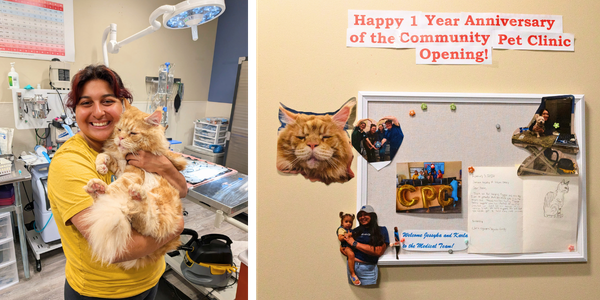
When the Community Pet Clinic opened last August, Essential Care moved to McKee Road. The same doctors continued serving many of the same families, but with a surgical suite, X-ray equipment and space to provide more advanced care.
“Before, we could help you treat it, but we couldn’t always help you fix it,” Nadia says. “Now we can.”
Nadia describes her time at the CPC now with affection. Everything about the shelter had changed. The Wednesday clinic hadn’t: same doctors, same routines, same families, “It’s still kind of like my space away from the shelter,” she says. “We’re still helping families.”
The difference is what a larger brick and mortar can provide. Masses come off here now. Ear hematomas get repaired here. Now, they can treat it and fix it.
Making Wednesdays Work
Many Essential Care patients are referred through HSSV’s neighborhood wellness clinics, held at parks, community centers and supportive housing sites throughout San Jose.
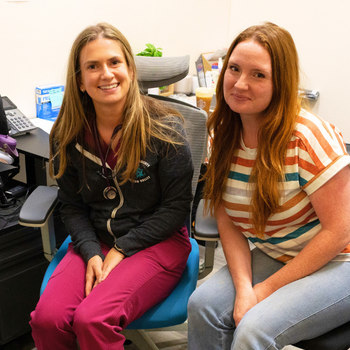
Dr. Selene Ramer is the primary Essential Care veterinarian and has been a constant through the move from Capitol Park to McKee Road. During my visit, she moved from exam room to treatment to checking in on a dog recovering from anesthesia. She touched every corner of the work.
“Dr. Ramer holds down the fort,” says Rhiannon Thomasy, an RVT and HSSV’s community medicine veterinary services manager. “She approaches all patients and clients with compassion, thoughtfulness, and flexibility. Because of her coordination, animals have received literally lifesaving care.”
The day before my visit, one of the techs had been at Abode, a supportive housing partner, and came back with three cat spays on the books for Monday. Others are foster animals or pets currently in HSSV’s care. But most patients aren’t referred at all – they’re families calling in themselves, looking for care they can afford.
Appointments start with a phone call and a few questions, such as: Is your pet eating? Drinking? How’s their energy? 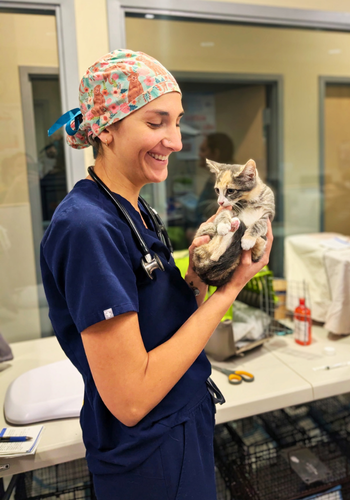
An animal that isn’t eating or drinking needs to be seen sooner than a once-a-week clinic can manage, and the team says so. Each case is evaluated individually, with the team working to make treatment affordable for community families.
“All pets should have access to veterinary care,” Dr. Ramer has said, “and while some owners have more resources than others, we should be able to provide a spectrum of care and provide reasonable veterinary care to all pets.”
In practice that can mean adjusting a treatment plan, or treating symptoms rather than chasing a diagnosis, or, often enough, being a place someone can call in and describe what’s wrong.
The rest of the week
Sundays and Mondays are public spay and neuter. Mondays are mostly cats, plus whatever dogs didn’t get done on Sunday.
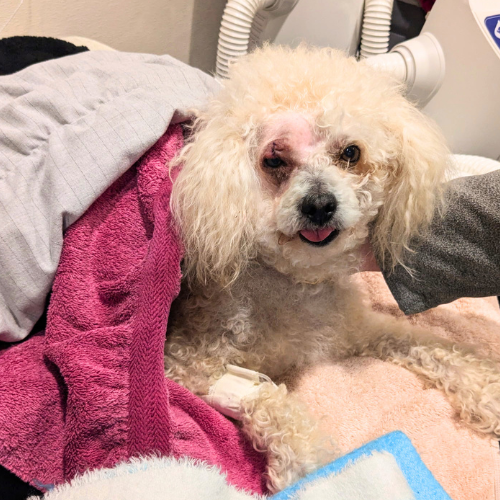 Fridays are shelter animals. Fosters drop them off in the morning, and when a foster can’t make the drive, a volunteer does it. On the Friday before my visit, Dr. Moore and Dr. Ramer did two leg amputations – one on a shelter dog, one on a foster alumnus. Fridays are also where hernias get repaired during a spay, so a shelter animal leaves ready for vet care post-adoption.
The last Sunday of every month is TNR day, and the building changes completely.
On an ordinary clinic day, the place is busy but relatively quiet. Animals get dropped off, chatter filters through doorways.
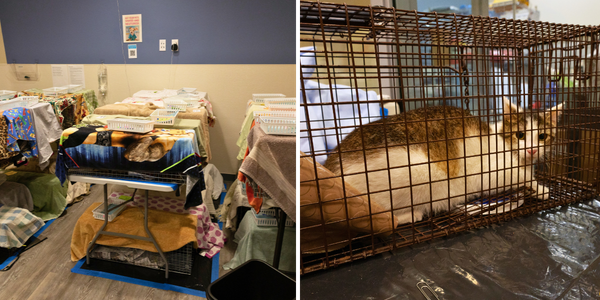
On TNR Sundays, the floor fills with traps stacked on top of each other until there’s barely room to turn around. The traps are heavy – one staff member describes how her arms were so sore after the last TNR Sunday that she’s bringing her partner to help lift at the next one. Some cats are pregnant. Some, if they aren’t sedated yet, are thrashing.
“It’s going to be smelly,” Nadia said about the next one. She was looking forward to it.
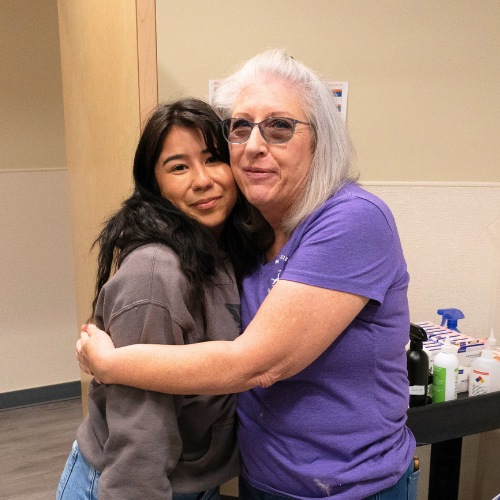
TNR Sundays run on volunteers. Laurie has been volunteering with HSSV for seventeen years, and she calls TNR her day. She has a soft spot for ferals in particular. She likes wiping them down and cleaning their ears, and she says she respects them enough that she doesn’t feel threatened by them. In seventeen years she’s been scratched once. “There is an energy transfer, for sure,” she says.
Some of the work that happened at the shelter’s Medical Center pre-fire happens on McKee Road now. When Dr. Shearer needs an X-ray on a shelter animal, she schedules it, brings a tech, drives over, gets the X-ray, and drives back. It cuts into the day, but it’s better than having to find a third party to rent equipment and space from.
Last week Dr. Moore brought vet students here and had them perform a couple of spays. You can’t teach surgery on a bus.
Two Paths to the Same Room
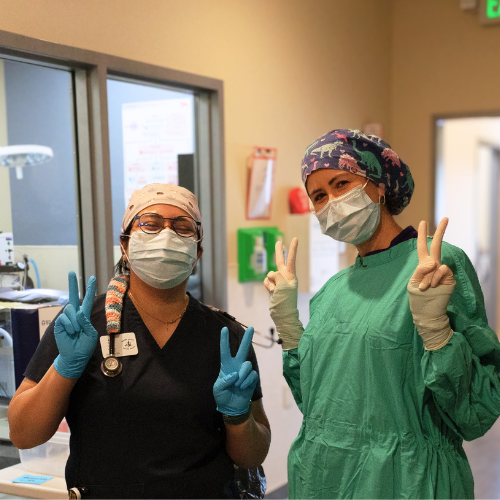
Dr. Shearer was a general practitioner before she was a shelter vet. She started at HSSV as a volunteer, trained under Dr. Moore in high-volume technique, and later took a spay-neuter course at an ASPCA training site in South Carolina. “Surgical confidence is a hard thing to develop,” she says. You get it by dong it. She’s done enough now that she calls it muscle memory.
Ask her what she likes about surgery and she says: “It is so nice to fix something and really impact the animal’s life, and also the owner’s life. So basically a family’s life.”
Nadia started in general practice too, in San Diego. What wore on her wasn’t the work. It was the clients who’d been coming for years, paying every bill, until they were faced with the one bill they couldn’t afford. She kept hunting for resources for them until she was told she was spending too much time on that.
“I was like well, then, what am I here for?”
She came to shelter medicine wanting to do spay and neuter. What she found was the community clinics, and the thing she talks about now is trust: going to the same sites, seeing the same people, and watching them get more comfortable bringing their animals in.
Back on the Table
Dr. Shearer finishes the spay with a splash block, lidocaine that provides about an hour of local relief while the rest of the pain management catches up. Then she stitches a small tattoo, which every animal here gets, so that anyone who might find this dog later will know she’s already been spayed.
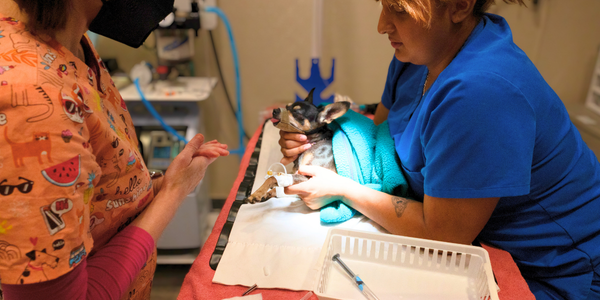
With the surgery done, here’s what’s no longer on the line: mammary tumors, pyometra, a dangerous birth. “She gets to live a longer, happier life with her family.”
While the Chihuahua was under, a dog who came to HSSV on a transport is waiting for her turn.
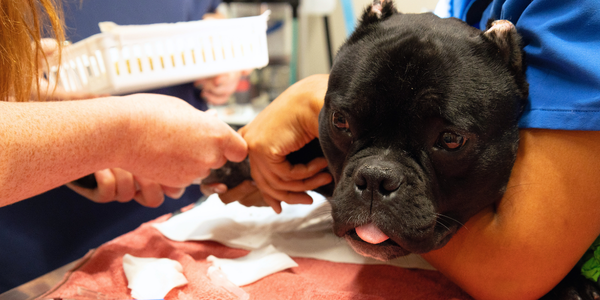
She arrived with a bad ear problem – scarring and an infected ear canal – and needed surgery to correct it. The ears are healing nicely. She’s in foster now, she’s sweet, she’s good with other dogs, and she’s listed as adoptable pending spay. Today is the spay.
The Chihuahua belongs to a family who’ll pick her up this afternoon. The transport dog doesn’t belong to anyone yet.
The Chihuahua wakes up in the treatment area. Someone calls her owner and asks them to come pick her up. In the next room, the transport dog’s surgery is still ahead of her, along with the chance to find a family of her own.
2 Comments on “One Year Inside the Community Pet Clinic”
I love reading about all the great work this organization is doing to help our community.
Wonderful article and I love volunteering at the CPC on Mondays! HSSV is a wonderful family to be a part of.
Who can I thank for this article?!?!