

The shelter’s South Wing used to have a room set up like a living room – a sofa, the furnishings of an ordinary home – so that shelter dogs could get used to the idea of one. One rainy day, volunteer Rod brought a German shepherd named Callie inside and sat down on the sofa. Callie shocked Rod by jumping up and snuggling against him.
To understand why that was a breakthrough, you have to know how they met: she avoided him, barked out of fear, and needed space.
Rod is one of HSSV’s volunteer matchmakers. When you visit, the matchmaker is the person who asks about your home, your routine, and what drew you to the animal you came to see — then helps you meet the ones who fit. They know each animal as an individual: which dog needs a quiet house, which cat takes a week to say hello. Their goal is to send you home with the right one.
August is Clear the Shelters month, and the name suggests speed: move the animals, clear the kennels. HSSV’s matchmakers support this national initiative with intentionality, by treating each adopter as an individual and making one match at a time.
The dog side: Rod (and Janet)
Rod has been matchmaking before the job had a name. When he started volunteering in 2012, adoption counselors would ask him to introduce dogs to visitors because they were swamped, and because Rod was already a friend of the dog in question. When the matchmaker role became official, he helped train the first class of them.
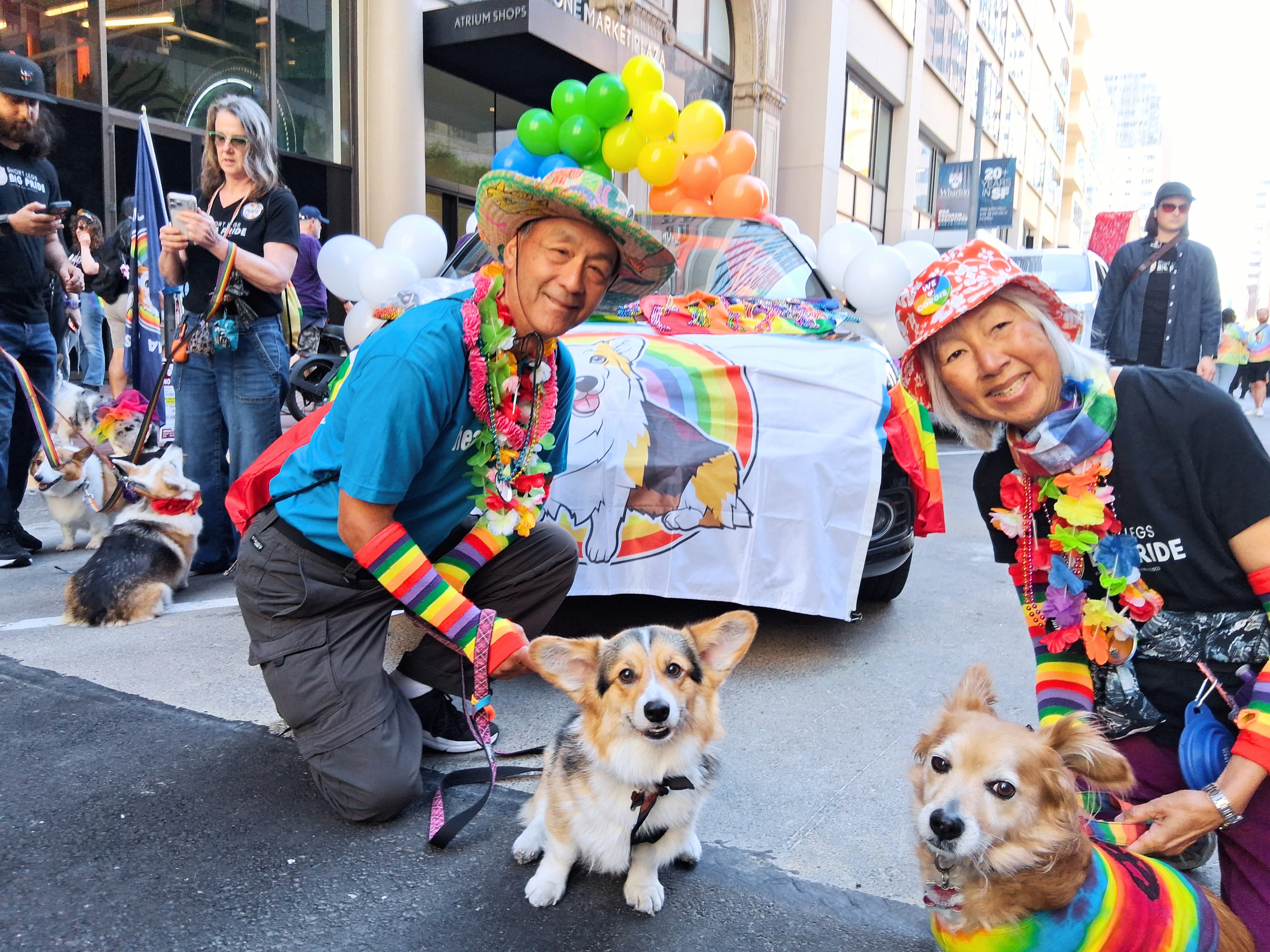 He didn’t do that alone. Rod’s wife, Janet, joined HSSV the same day he did, and they taught the matchmaking class as a team: she covered the adoption side, he covered the behavior side. They still work introductions the same way. Janet takes you out to the turf first and preps you – this dog’s personality, what to expect, how to say hello. Meanwhile, Rod is leashing up the dog and reading them on the way out, making sure today is a day this dog is up for meeting someone new. By the time dog and human are in the same yard, both halves of the match have been set up to succeed.
“Behavior calls me and Janet the bonded pair,” Rod says.
The dogs Rod works with are the ones who take longer: shy, reactive, rowdy, mouthy, jumpy. Before you meet one, he walks you through exactly who this dog is and what living with them will ask of you. Only then does he ask: do you still want to meet this dog?
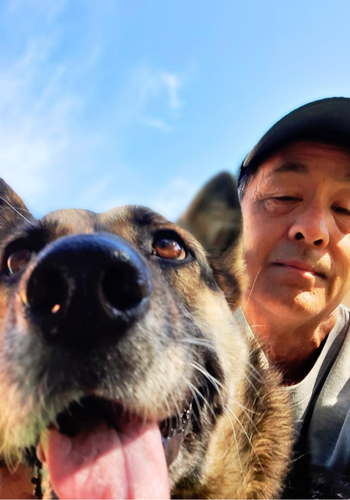 The dog Rod remembers most clearly, out of all of them, is Callie. She asked for more than most. She was very wary of new people, and Rod started spending time near her room whenever he was at the shelter – sitting in the courtyard, letting her come out, sniff him, and retreat. Then she’d take a tossed piece of cheese. Then a treat from his hand. Then light scratches on the chest and chin. The sofa came months into this. She was at the shelter for over a year before a mother-daughter pair adopted him, visiting again and again, committed to meeting Callie on her terms and her timeline. They even spent Christmas day at HSSV with her, bringing her and the staff presents and treats.
“She was a special dog that touched a lot of us,” Rod says. Those in her inner circle all knew how special she was, and could only learn that from the kind of attention and time Callie needed.
Rod has a lot of learnings from his time as a matchmaker and can dispel a lot of myths. “A big misconception about dogs that are shy and afraid of new people is that they were abused,” Rod says. “I believe most are afraid because they just haven’t experienced new people.” To these dogs, everything is new is scary – including you, standing at the kennel door, wondering what happened to this poor dog. Usually, this dog just needs to learn what the world has to offer, and see that it offers good things.
“Once you are able to read the dog, you relax,” he says. “And then the dog relaxes, and a relationship can be built.”
“Rod is such a calm presence – almost zen,” says Gladys, a staff member Rod trained several years ago. “He really taught me to wait. If a dog is shy, I don’t have to do much. Come in with calm energy, give them space, meet them where they’re at – physically and mentally.” She remembers one dog too shy to approach anyone. She crouched down to eye level and waited. The dog came to her.
The cat side: Stephen
Down the hall, on the cat adoption floor, Stephen is running the same translation service in the other direction.
Stephen came to HSSV over a year and a few hundred cats ago. During kitten season, when the floor jumps from two or three adoptions a day to five or ten, most visitors walk in wanting a kitten. Stephen asks a few questions first. Especially if it’s their first cat.
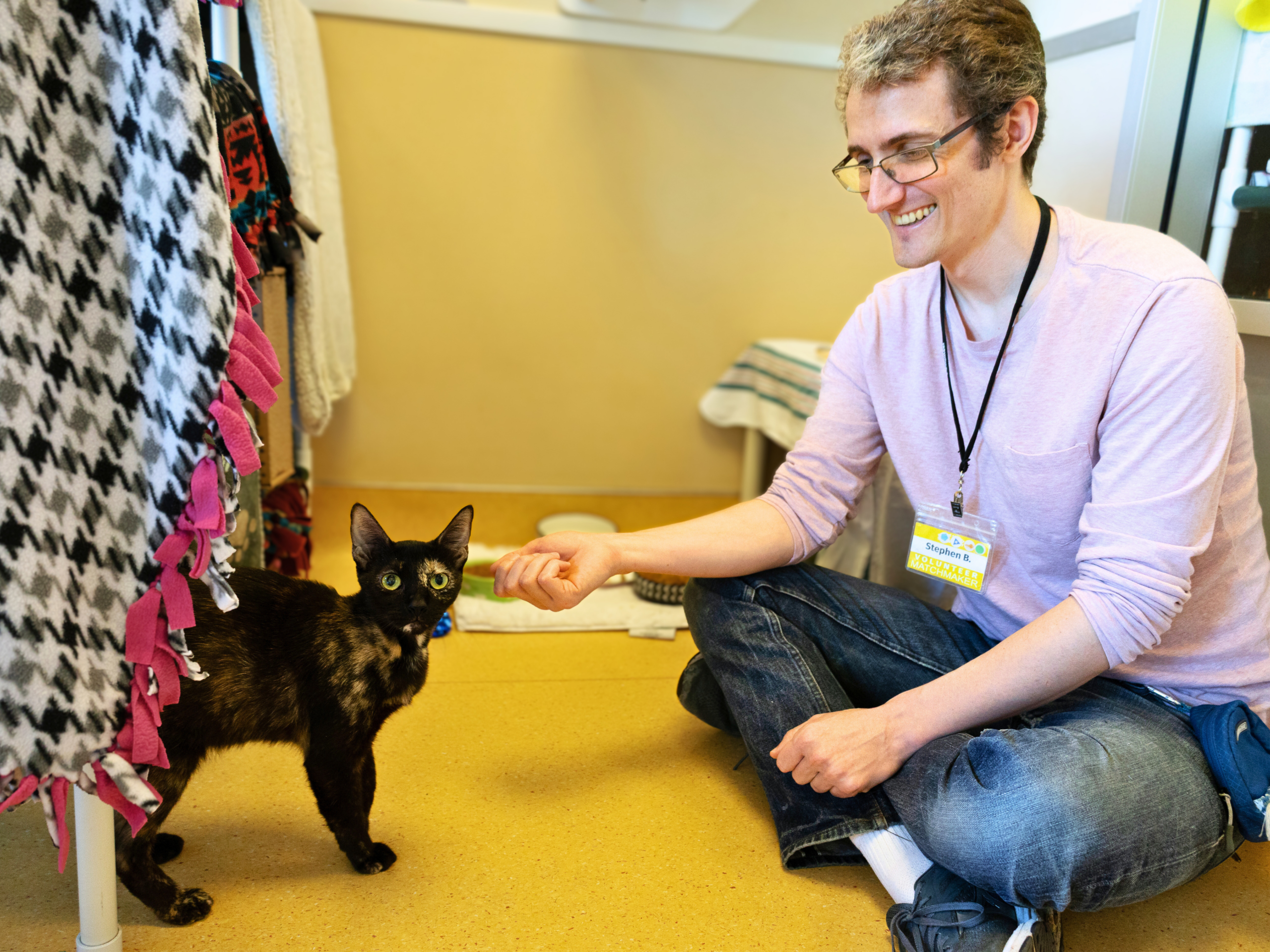 “When you adopt a kitten, you’re not really adopting a kitten,” he says. “You’re adopting a cat that’s wrapped in this little kitten body. You’re going to open that present, and there’s going to be a cat inside.” A kitten is a kitten for six months. They’re a cat for twenty years – and with a kitten, you don’t know which cat you’re getting. A one-year-old cat, in Stephen’s framework, is like an eighteen-year-old person: still changing, but the core is there. You know who you’re bringing home.
So part of his matchmaking is noticing when someone’s home and lifestyle actually fit an adult cat, and inviting them to at least say hello to one.
The cats most likely to be passed over, Stephen says, are the shy ones in their first days here. The journey to a shelter is chaotic, and a shy cat arrives shut down – reluctant to take a treat, reluctant to be pet, wanting only to know they’re somewhere safe. Those are exactly the days most visitors see them. Come back a week later, after every volunteer has played the same game – sniff my finger, get a treat — and the same cat is greeting you at the front of the kennel, sniffing your shoes to find out everywhere you’ve been.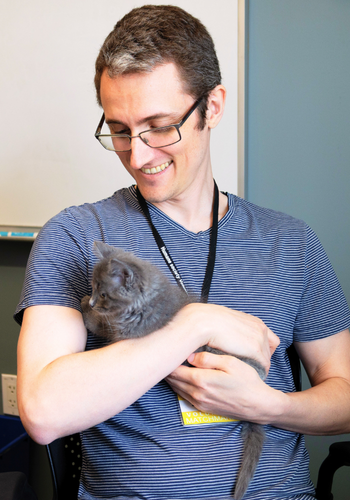
Stephen has a favorite way of speeding that along. In the middle of a hectic kitten-season shift, he’ll slip into a room with a shy adult cat, prop the cover of their hiding spot open a little, offer a finger, and then just sit there reading on his phone. “Being alone together,” he calls it. The cat learns that this is the kind of person who lets you keep your space – which is exactly the kind of person shy cats come out for.
As for the visitors who can’t decide – the ones waiting to feel a spark before they commit – Stephen’s advice comes from experience: “It kind of doesn’t matter. There’s no wrong choice. You can just take a cat home.” He means it. Stephen was a dog person who didn’t especially want a cat; now he plans his week around them. The spark isn’t the part you find at the shelter. It’s the part the two of you build at home.
One good match at a time
Rod and Janet read dogs so adopters can learn to. Stephen reads people so cats end up with the right ones. And the animals who wait longest – the Callies, the shy cats in their first week – wait because a good introduction takes more than a walk past the kennel. That introduction is what the matchmakers are there to do.
One Comment on “Meet the Matchmakers”
Rod and Janet trained me in my dog matchmaking role. They are so wonderful and kind to both humans and dogs. HSSV is so lucky to have them.