
Carol Pollard was the most giving person her husband ever met. In her memory, Clive Pollard has created a fund to support compassionate end-of-life care at HSSV.
Long before there was a fund in her name, there was a cup of coffee in Denver.
Clive Pollard was there on a business trip he had no reason to take. His boss just wanted company. Carol was a cocktail waitress at a nightclub in the Regency Hotel, where he was staying, and when Clive asked her to coffee after her shift she said she would think about it. Then she sent two other cocktail waitresses to his booth to interview him. He passed. “We chatted and discussed the world until five o’clock in the morning,” Clive says. A few months later, they were engaged at the Trevi Fountain in Rome.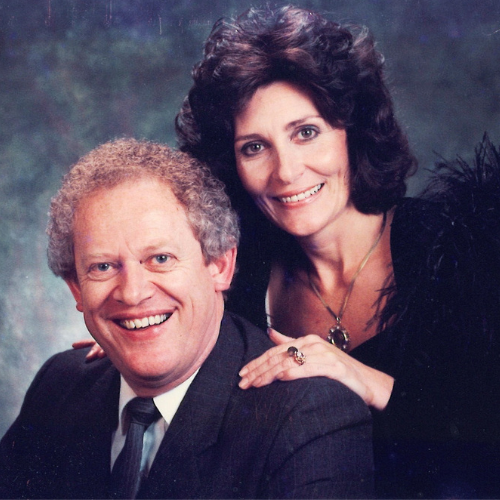
Clive and Carol would have been married fifty years this year. In Carol’s memory, Clive has given $100,000 to HSSV to establish the Carol Pollard Compassionate Care Fund, providing compassionate end-of-life care for animals and support for the people who love them.
Clive had arrived in the United States from England in 1962, twenty years old and just $80 in his pocket. He went on to build a successful financial services business, and he and Carol raised two daughters. “I have lived the American dream,” he says. “I’ve had a fabulous life. I have a wonderful family. And I had a phenomenal wife.”
For nearly two decades, Clive and Carol supported HSSV together as Faithful Friends. But even Clive didn’t know how far Carol’s giving went until after she died, when the mail started piling up and revealed she had been supporting 49 charities. “It just epitomizes how giving she was,” he says. “The most giving person I’d ever met in my life.”
Animals ran through their life together. Early in their marriage, they adopted a dog named Boo Boo from a shelter. When he dug his way out of the yard and was hit by a car, it was “terribly upsetting,” Clive recalls, and they never adopted again.
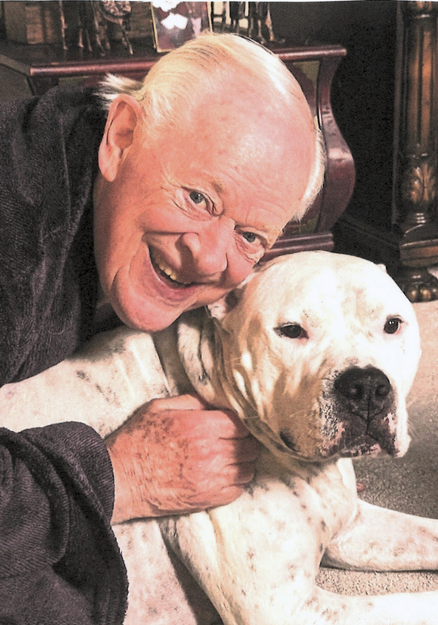 Without a dog of their own, Clive and Carol looked out for other people’s, as if each one were partly theirs. Both of Clive’s daughters, Colette and Chimene, have adopted dogs of their own: Bosun and Oscar. Chimene brought Oscar along every weekend when she stayed with her parents, and for a couple days a week, Clive and Carol basked in the joys of having a pet.
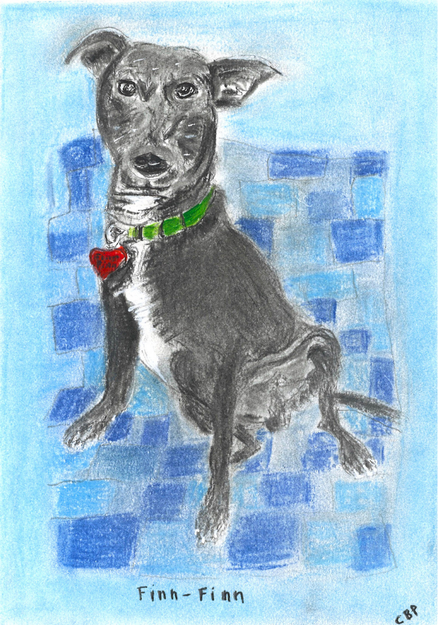
Carol looked out for other people’s animals, too. When a neighbor couldn’t keep fostering a dog, Carol found him a home with a woman down the street who had just lost her own. That dog, Finney, still comes to Clive’s door every night for a treat. “Because of Carol and his owner,” Clive says, “I get the joy of seeing Finney every day.”
Carol was diagnosed with cardiac amyloidosis, which Clive describes as “rogue proteins that developed around her heart.” She declined over two to four years. In her final months, she faced barriers to care that no family should have to navigate alone. Even then, her instinct was to help. She hoped she could continue to ease the suffering of animals in need, beyond her lifetime.
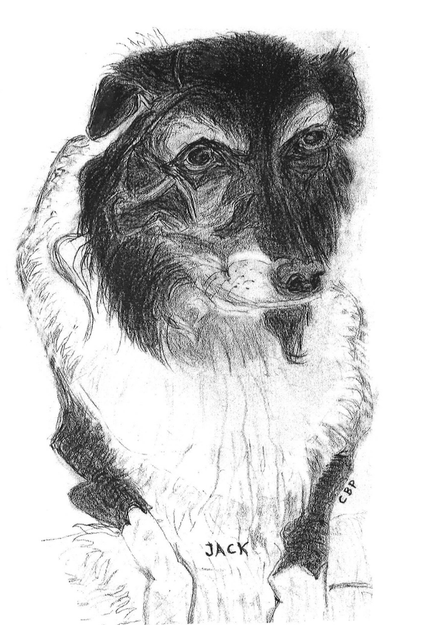
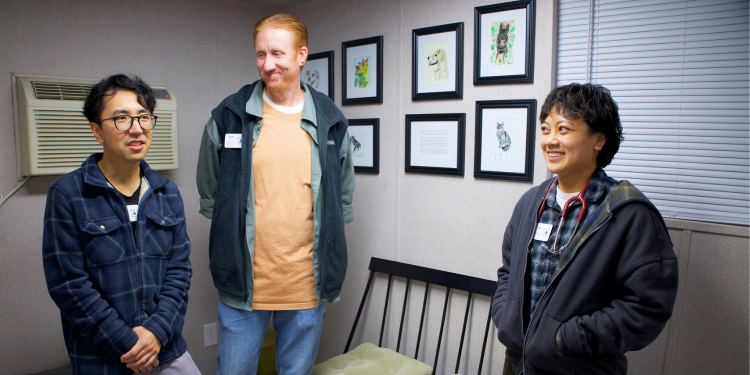
Those years also brought out a talent no one knew she had. Carol, who had never drawn anything in her life, began drawing animals. She started with dogs and soon drew every dog in the neighborhood, then cats and horses. She couldn’t explain it herself. “Pretty remarkable, really,” Clive says. She gave the portraits to the people who loved those animals, some in memory of pets who had died.
Many of the drawings now hang in HSSV’s Rainbow Room, where families gather to say goodbye.
At HSSV, families can stay with their animals until the very end, while certified animal care staff help each pet feel comfortable and gently explain each step. One of those people, Scott, has helped hundreds of families through those goodbyes. “It’s not something everyone can do,” he says. “But I’ve found that if I hold it together, I can be the rock, and it helps everyone else breathe through it.”
Keeping your composure, Scott says, can be learned over time. It takes time not to get emotional. “There are moments where everybody’s going to be touched,” he says. Most of the staff who do this work with him spent months or years watching him first. “I won’t say fearless, because there’s always nerves,” he says. “But they learn to keep their composure.”
In Carol’s memory, Clive’s $100,000 gift is helping HSSV teachthese indispensable skills. Certification classes are hard to come by, and this work asks a lot of the people who do it, so HSSV is developing its own euthanasia certification program. Eleven of its staff members are already certified. The goal is to open the training to other shelters, so families there can find the same care.
The fund also covers the cost of humane euthanasia for families who can’t afford it. Whatever their finances, they can give their animal a gentle, dignified goodbye, with someone beside them who has learned how to be a rock for them.
Carol hoped her passing might ease the suffering of animals. In her name, it does. And on a family’s last day with their animal, the animals she drew are on the walls around them.