

Community cats don’t always cooperate with the people trying to help them. Sophie shares what trap-neuter-return really takes, from nights spent trapping in her own neighborhood to why fixing just one cat in a colony isn’t enough.
It took Sophie, HSSV’s TNR Specialist, a year to catch one cat on HSSV’s own campus.
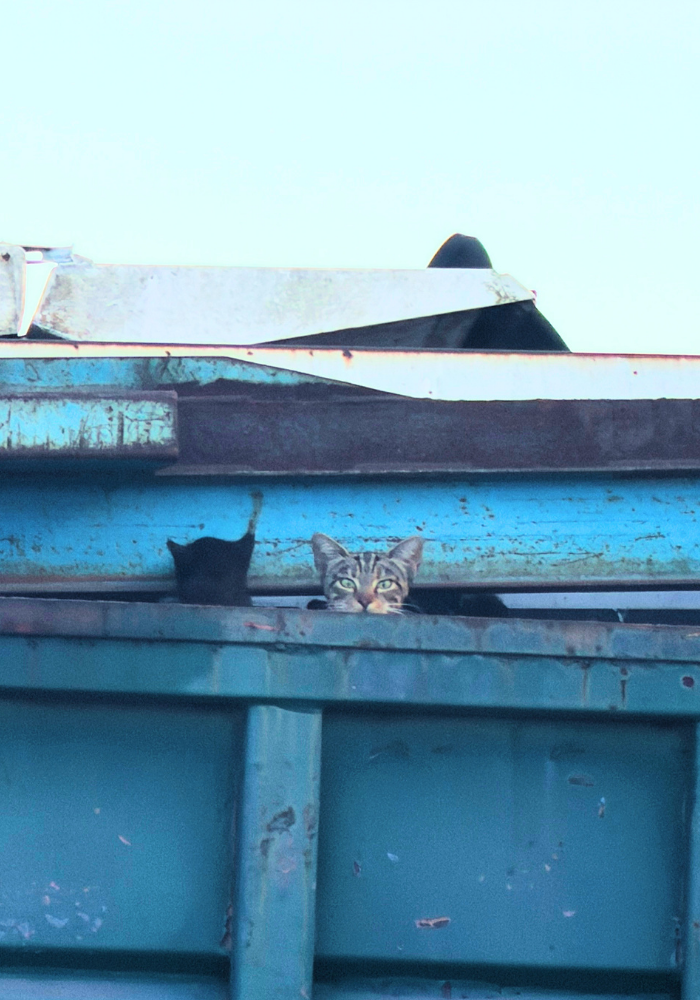
She first saw him out in the back parking lot, where a lot of the campus cat regulars hung out. He was a ticked tabby with a white face and full tail, and he was new to her. He was missing an ear tip – the clip on one ear that marks a community cat as already spayed or neutered – which meant Sophie had a new project.
“I saw this new cat, no ear tip, and thought, who is that guy?” Sophie says. She started calling him her nemesis.
 A TNR trap is a specially designed box with a spring-loaded door that snaps shut when a trip plate is triggered. “Stinky food” offerings like KFC or canned tuna are placed at the far end of the trap, so a cat has to walk over the trip plate to reach it. It works well for hungry cats. The problem with Sophie’s nemesis was that he was never hungry enough.
“Cats aren’t stupid,” Sophie says. “They’ll know they’re cornering themselves, so the incentive has to be really high to get them to the other end of the trap. If they’re hungry enough, they’ll go in.”
He had other options. There were other community cats nearby, and on campus, Dynell, who has fed HSSV’s community cats for years, sets food out every morning. “I couldn’t get him hungry enough because there’s food everywhere.”
Once, she trapped one of the cats she’d already fixed right in front of him. “He literally saw his buddy get trapped.”
Then it was kitten season. “It’s really common for tomcats to go much further than their usual territory because they’re out looking for ladies,” she says. “So he would disappear for a couple of weeks.”
The end of this saga with her nemesis was random and unexpected. One afternoon Sophie set up a trap as usual, her expectations low, and for some reason he walked in.
“I just got lucky,” she says. Except it wasn’t really luck. “It was perseverance,” she amends. “I spotted him and thought, maybe today’s the day.”
TNR wouldn’t work if the trapper wasn’t at least as stubborn as the cats.
Sophie was introduced to the world of TNR way before she started at HSSV. When her roommate at the time found kittens at her job at the Winchester Mystery House, Sophie messaged a cat rescue she knew from Facebook and asked if she could foster the litter under the rescue. They said yes, then sent someone out to find the mother and trap her.
“It clicked, and I thought it was so cool,” Sophie says. “So we don’t keep finding vulnerable kittens there.”
When she joined HSSV about five years ago, her first gig was fostering kittens, and she loved it. The people she was really drawn to, though, were the trappers who came in from the public.
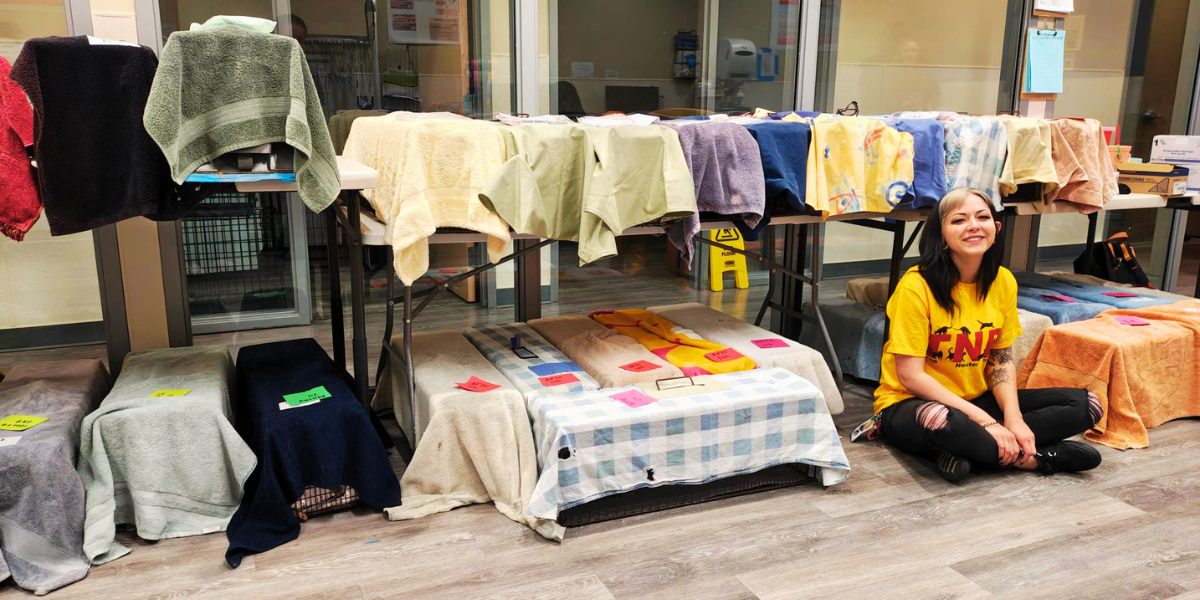
“These people are staying up late at night, losing sleep, skipping meals, spending money on gas and cat food to trap these cats, just to prevent kittens from being born and suffering outside,” she says. “It’s not necessarily a sweet, cute thing. They’re not cuddling them. It’s not like when you foster and you get all the kitty cuddles. It’s the most selfless thing in rescue, I think.”
She developed a friendship with Vanessa Forney of Bay Area Cats, who has trapped thousands of cats while holding down a full-time job, and decided she wanted to get involved herself. She has since TNR’d around 60 cats. Trappers, she says, are still her favorite people in the entire world. “They’re the kindest people I’ve ever met, and the fiercest advocates for the cats.”
Sophie doesn’t feed cats or manage any colonies. She has, however, moved into a cat colony everywhere she’s lived in San Jose. “I move so much, and I keep moving into colonies,” she says. “I realized over time there’s just cats everywhere.”
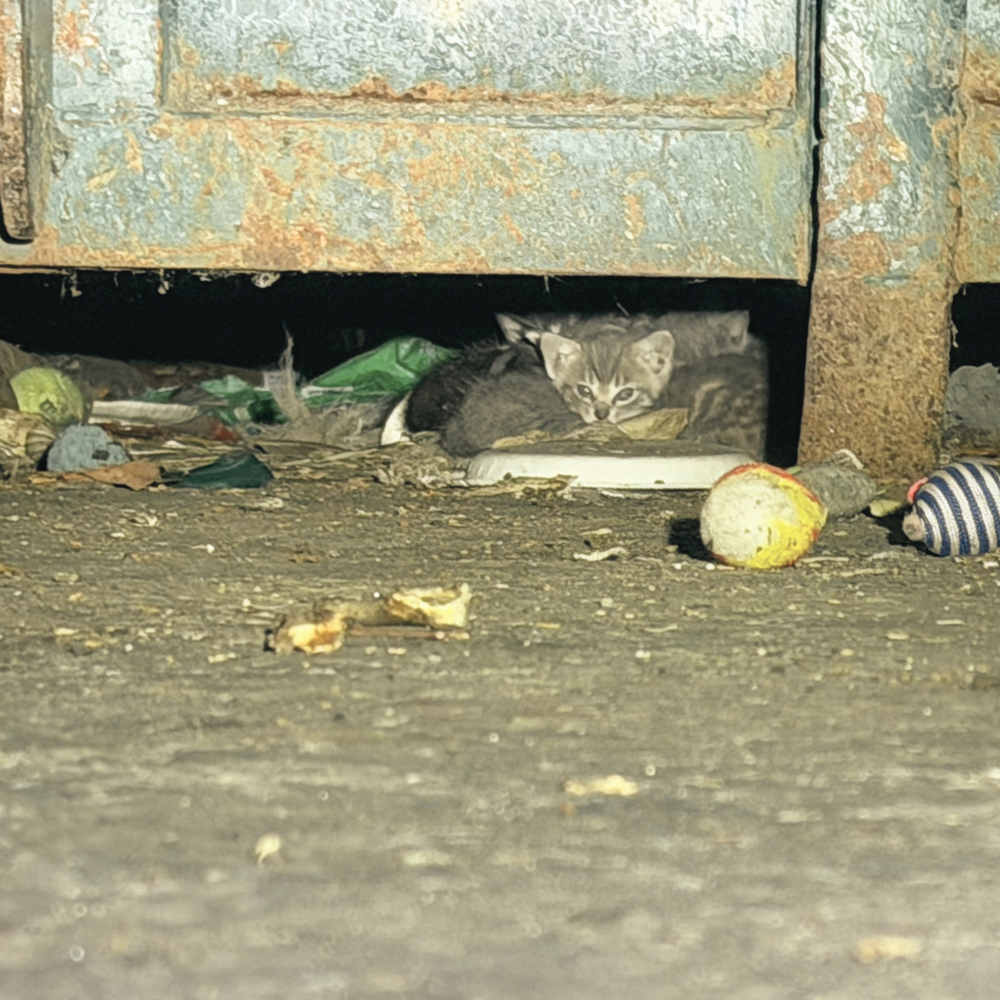
Her most recent move was last March. Within days, on an evening walk, she spotted a mother cat with kittens right next door to her apartment, the kittens peeking out from under the neighbor’s fence. She knocked the next evening, and the neighbor was so happy when they learned Sophie worked at HSSV. “She was like, oh thank god, can you help me? I said yes.”
She caught the mother, Walnut, and all of the kittens in one trap, after about an hour of waiting. “I just moved, and right away I brought a cat to work to TNR and had kittens in my spare bedroom,” she says. “I hadn’t even unpacked.”
Walnut was one of about 35-40 cats Sophie estimates live in the neighborhood. Later that month, on the night before a Sunday TNR clinic at HSSV, she went back out for more of them.
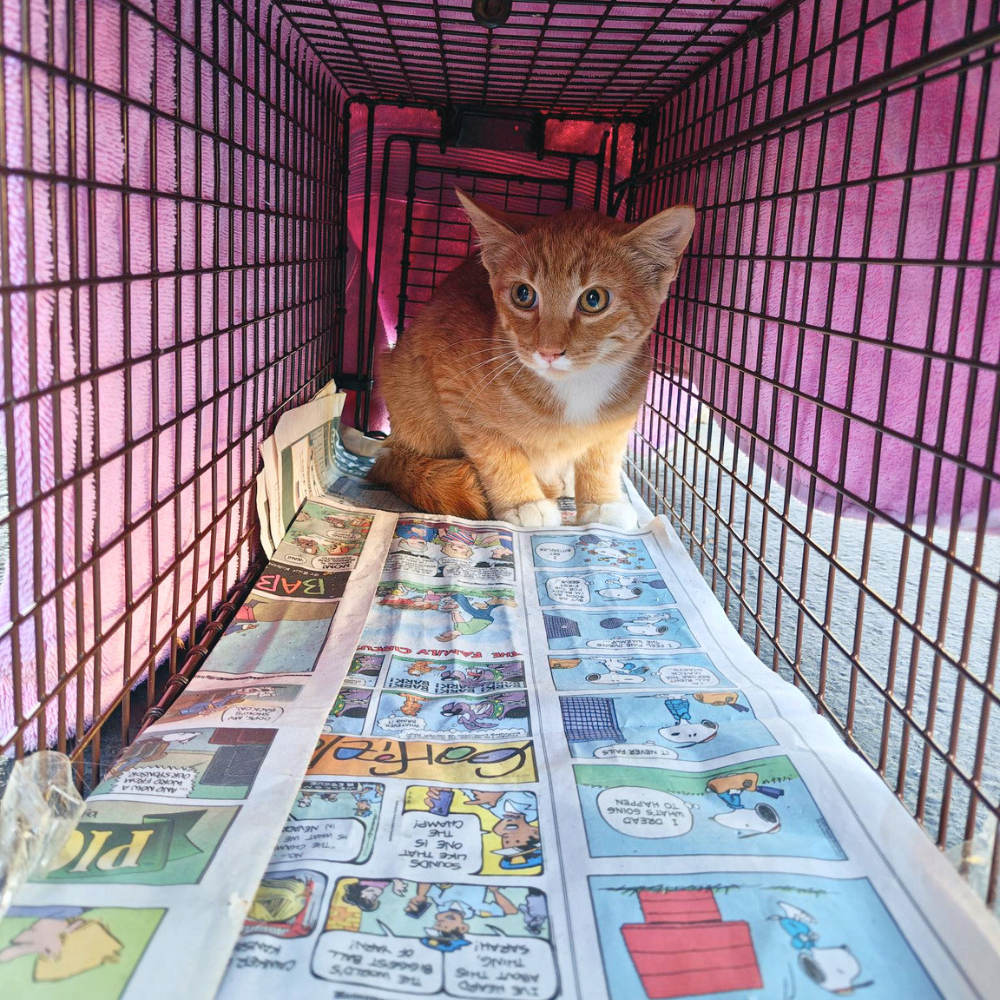
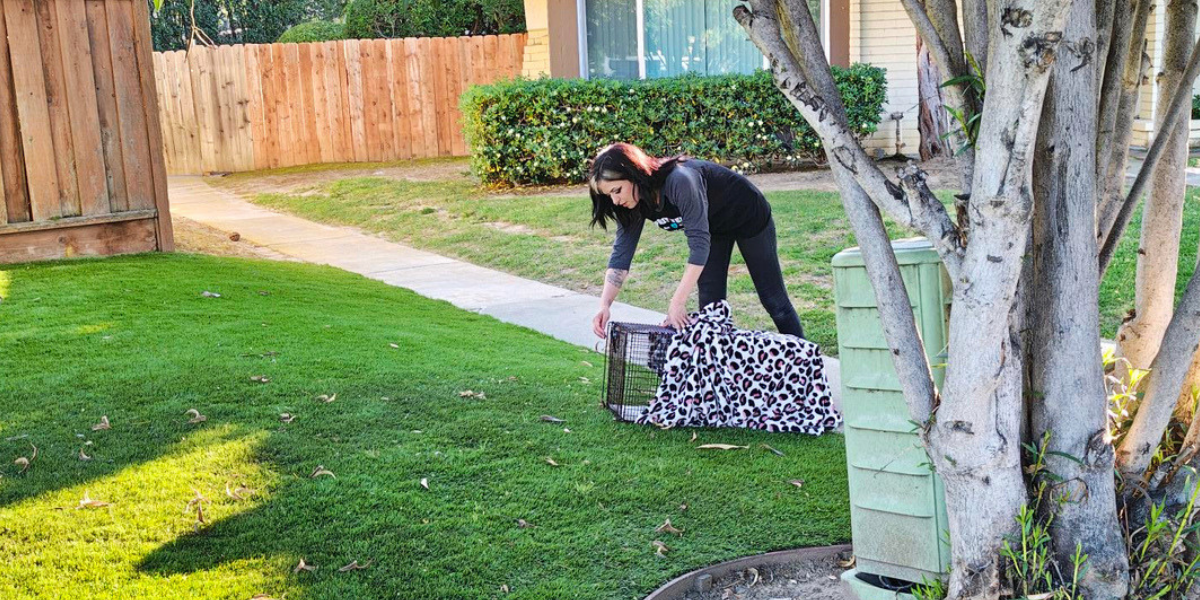
Two feeders had skipped the day’s meal so the cats would be hungry. Sophie took one zone, and Lissette, a trapper she works with, took another a block away. They started at 6:30PM. Sophie baited traps with “stinky food,” laying a little at the entrance of each trap and the bulk at the back.
When a trap snapped closed, she covered it right away to reduce the panic an uncovered cat might feel. The blankets in her home were already in use as bedding for the foster kittens, so she used old curtains. One trap caught a cat who already had an ear tip, so she let him go. Moving a big, angry tom from a trap into a transfer carrier still makes her nervous sometimes, but it’s all in a day’s work for Sophie.
By the end of the night they had nine cats, five of them Sophie’s. The number of total cats that Lissette has TNR’d through HSSV is close to 1000 – and since she uses other clinics as well, her actual total is probably much higher.
The cats spent the night in Sophie’s locked garage. In the spare bedroom back in her apartment, the foster kittens had YouTube videos playing, part of getting them used to the sound of people.
Her own cats, Bugsy and Lucy, are Persians. “They’re not street cats,” she says. “They’re cute. Rescues, but they’re not tough. They would last a minute outside.”
Eventually, in any given neighborhood where Sophie is trapping, it becomes time to “trap train” the community cats still left. This means zip-tying a trap’s door open so the cats could come and go as they pleased, eating the food inside without consequence. “You get them very acclimated to going in the traps, where they learn, ‘that’s just where I eat,’” she says.
One time, she left a trap out for a few weeks with a camera running, and watched one cat get so comfortable that she accidentally trapped him three times.
“He didn’t associate it with anything bad. He kept getting his food, getting trapped, and getting let out,” Sophie says. “I thought he was so stupid, but maybe not. He kept getting free KFC.”
People sometimes call HSSV’s campus cats “the ferals.” To this, Sophie says: “Bob Bob’s not a feral cat.”
She prefers “community cat,” which covers a whole range. “It includes anyone, from someone like Bob Bob, who is basically greeting our guests at the door, to the kitties you probably never see that only come out at night because they’re terrified of people.”
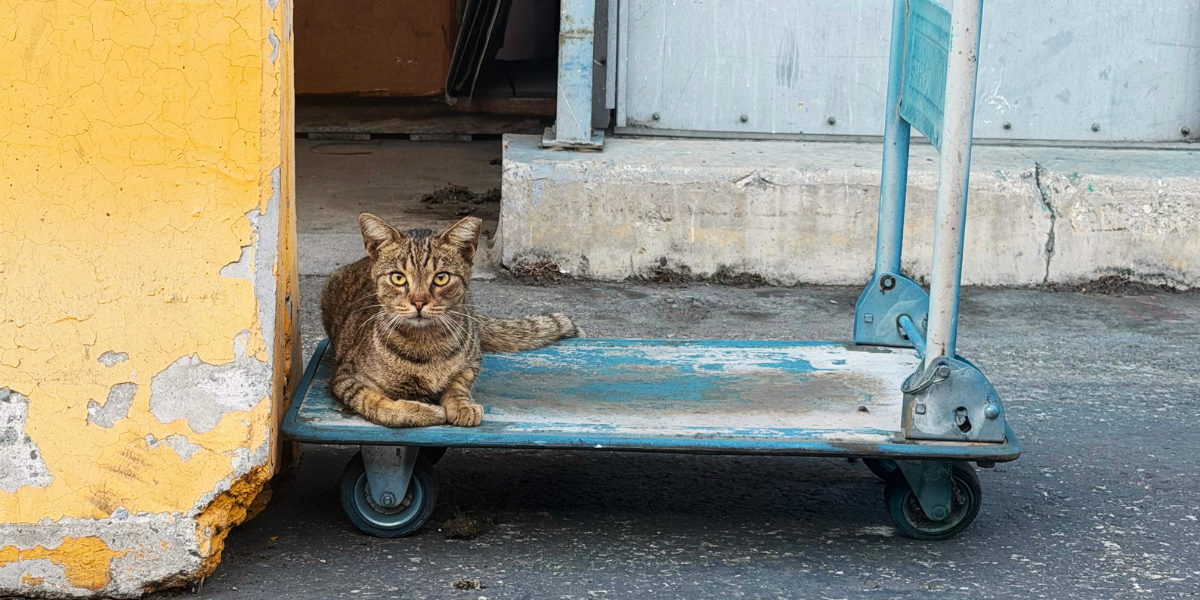
“Feral,” Sophie explains, describes behavior. Typically, it’s a cat who was born outdoors and didn’t have positive experiences with people as a kitten. “They don’t associate us with good things.” That fear can soften for the right person. “You could have a feral cat that is your pet and lives in your house,” she says. “People have feral cats as pets. It’s behavior, not circumstance.”
Community cats can build trust with individuals, even if they never step foot into a home. Sophie sees a lot of what she calls feeder-friendly cats, “cats that would be feral to anyone else, but become social with the one person who feeds them every day.”
“The feeders are the ones who really know the cats,” Sophie says. They’ll tell her which cat is whose mother and which one had a “crazy medical thing.” Mostly they know their own group of cats. Near her new place, one feeder had no idea about the cats elsewhere on the block. Before a trapping night, Sophie knocks on doors to let neighbors know what she’s up to.
The cats on those blocks go by Mr. Bro, Sissy, Mr. Boots, Tippy Toe, Emerald, and De Niro. Feeders don’t always agree on names. On campus, the black-and-white cat out back is Maddie May to Dynell and has always been Mumu to Sophie. She’s run into the same thing with her neighbors.
“You think you’re the main feeder for that cat, and someone else thinks they are. Two-timing cats.”
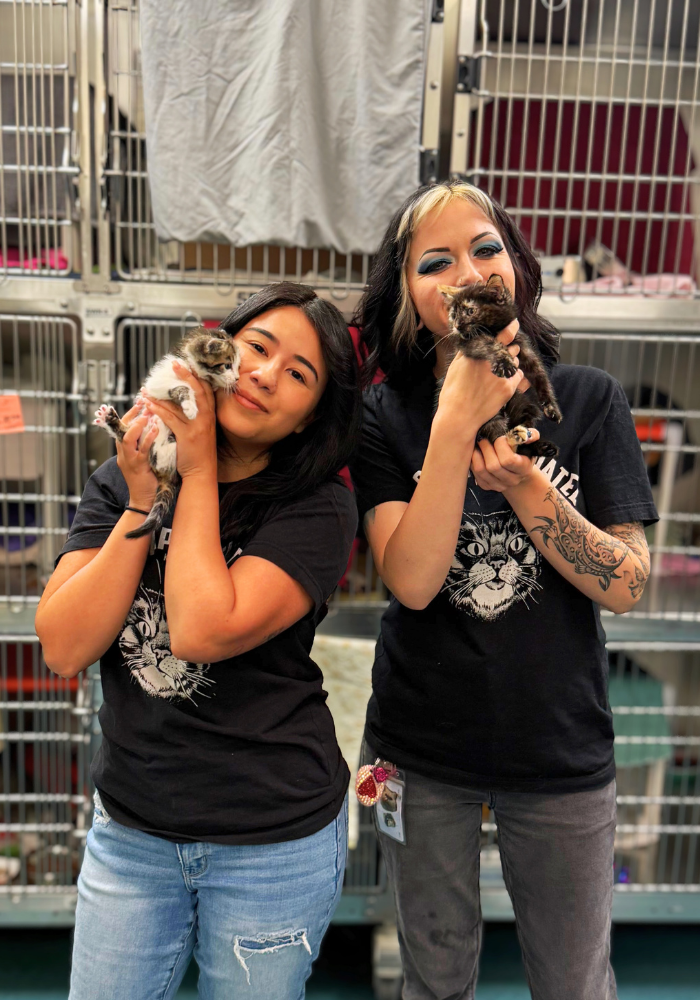
Lately, Sophie has been trapping with Ellie, a Community Services Associate at HSSV. Ellie got into TNR after meeting Sophie at work. “Seeing firsthand the cat overpopulation crisis really opened my eyes,” she says. “Sophie introduced me to TNR and showed me how important it is in helping control the population and improve the lives of community cats.”
The colony they’re trapping now, Ellie’s first, is at a local business. For the past three years, Ellie has been taking bottle babies from them, kittens too young to eat on their own. Then a friend asked if she could help with the cats there. “Something had to change,” she says.
The people at the local business originally said there were fifteen cats. One night, Ellie and Sophie went out and realized there were at least 30, possibly more.
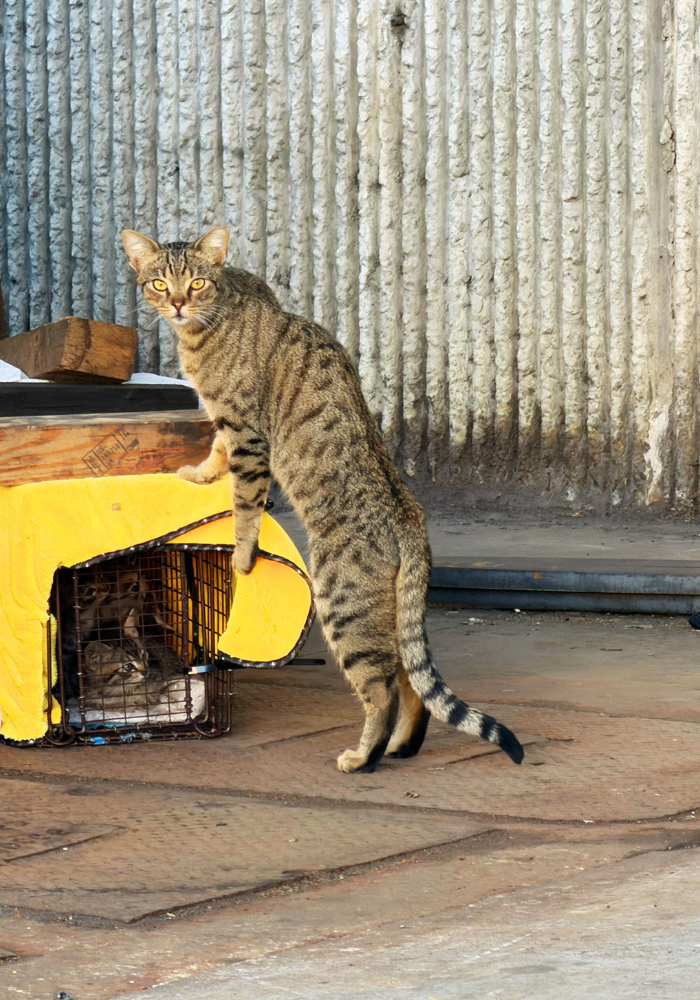 In four or five trips, they’ve TNR’d 18 adults and brought eight kittens into HSSV.
One mother cat at the yard had been getting pregnant since 2024. Her latest litter was six kittens. When they trapped her, Ellie felt relief. “She’s a young cat herself. She can finally live a healthier life now.”
“I have learned so much from Sophie,” Ellie says. “From the day I started, she has guided me and shown me how important it is to advocate. She’s very passionate and educated in the cat world. I like to say she’s like a big sister to me. She’s a true role model in the cat world.”
Sophie wants to make two things clear.
The first is that trap-neuter-return has to reach most of a colony before it changes anything. “Just fixing one cat in a colony is kind for that one cat, but it’s not going to do anything to the population of that colony,” she says. “It’s going to continue growing at the same rate.” HSSV works with feeders who commit to fixing at least 80 percent of the cats in their care, and ideally all of them.
In her own neighborhood, about 35 cats have been TNR’d, leaving about five to go.
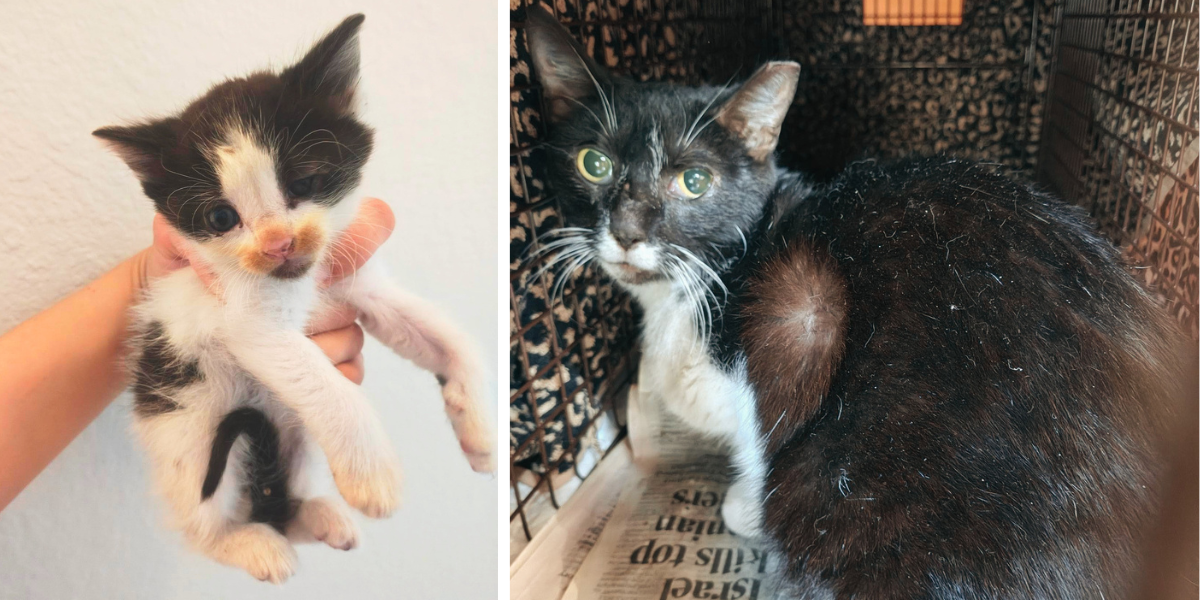
She’d also want people to see kittens and community cats as one issue. People come into intake all the time saying a litter was abandoned or left on a doorstep, and Sophie has a sense of humor about it: “All kittens have moms. They aren’t brought in from storks.”
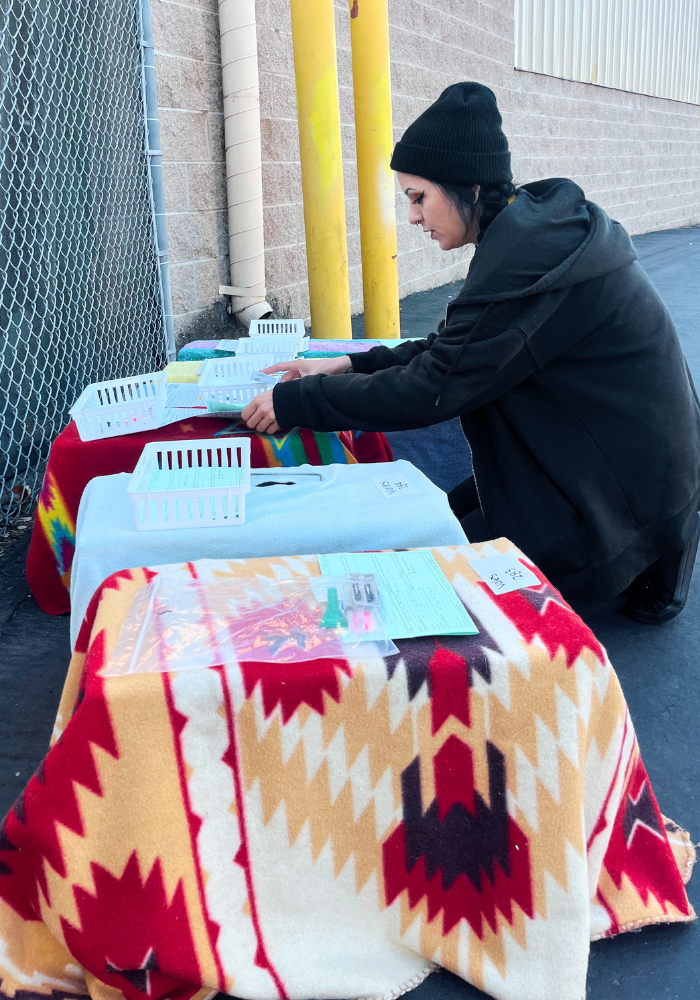
She goes on to say, “People see kittens and think, ‘so cute.’ And then they see community cats and think, ‘gross, stinky, and mean.’ But they’re all the same. Most cats are born outside.”
Sophie traces the cycle back to people’s pets. When owned cats aren’t spayed or neutered, she says, some of them and their kittens end up living outside as community cats, and that’s where the next litters are born.
Community cats can be happy, she says, but life outside is harder for them. “There’s not enough resources, not enough spay-neuter appointments, medical resources for kittens, even homes for them, especially when you get to the end of kitten season and homes are full. The only way to prevent that is through TNR and spay-neuter.”
For people with cats at home, the spay-neuter part is in their own hands. A pet who’s been spayed or neutered won’t add another litter to the cycle.
There are cats Sophie once considered totally feral that Dynell can pet now. Dynell has even shown her a video of herself petting a ticked tabby in the back lot.
Sophie doesn’t call him her nemesis anymore. Now he’s just Nemo.